
GROWMERA · AI FOR BUSINESS · CAPTURE & CONVERT
AI for business is most valuable when it removes friction from real customer journeys: answering quickly, understanding intent, qualifying demand, booking the next step and giving your team better information to act on.
The strongest use cases are not about adding AI because it is fashionable. They start with a recurring business problem. Calls are missed after hours. Sales teams spend time answering the same questions. Good enquiries wait too long for a response. Valuable information lives inside conversations but never reaches the right person.
This guide explains seven practical ways to use AI for business without turning the customer experience into a robotic maze. It also shows where Mera, GrowMera’s AI Receptionist and Voice Specialist, fits into the Capture & Convert stage of the GrowMera Growth Engine.

Where AI for business creates the most value
A useful AI workflow has three characteristics. First, the task happens often enough to matter. Second, the information needed to handle it can be clearly defined. Third, there is a measurable next step such as a booked appointment, a qualified lead, a routed request or a documented follow-up.
That is why customer conversations are such a strong starting point for AI for business. A phone call often contains the exact information a company needs: what the person wants, whether the request fits, how urgent it is and what should happen next. The problem is that businesses do not always capture that information consistently.
The goal is not to automate every interaction. The goal is to remove avoidable waiting and repetitive work while keeping human judgment available for complex, sensitive or high-value conversations.
1. Use AI for business to answer inbound calls consistently
A missed call is not just a missed notification. It can be a potential customer who moves to the next provider because nobody answered. This is especially relevant after hours, during busy periods or when a small team is already serving existing customers.
A well-configured AI receptionist can provide consistent first-line coverage. It can greet callers, understand why they are calling, answer approved questions and move the conversation toward a useful next step. The experience should still sound natural and give the caller a clear route when the request requires a person.
For GrowMera, this is where Mera starts: not as a generic bot, but as a voice specialist configured around the business, its services and the conversations it actually receives.
2. Qualify leads before they reach the sales queue
More enquiries do not automatically create more growth. What matters is whether the right enquiries reach the right person with enough context to continue the conversation.
AI for business can help collect qualification information during the first interaction. Depending on the business, that may include the requested service, location, company type, project scope, urgency or preferred time to speak. The criteria should come from the sales process, not from a random list of questions added by the AI.
This connects directly with GrowMera’s lead generation strategy. Marketing creates demand; qualification helps the team understand whether that demand fits. A better first conversation can reduce noise without making good prospects repeat themselves later.
3. Book the next step while intent is still high
One of the biggest conversion leaks happens between “I am interested” and “someone will contact you.” Every extra handoff creates another chance for the prospect to disappear, forget or choose another option.
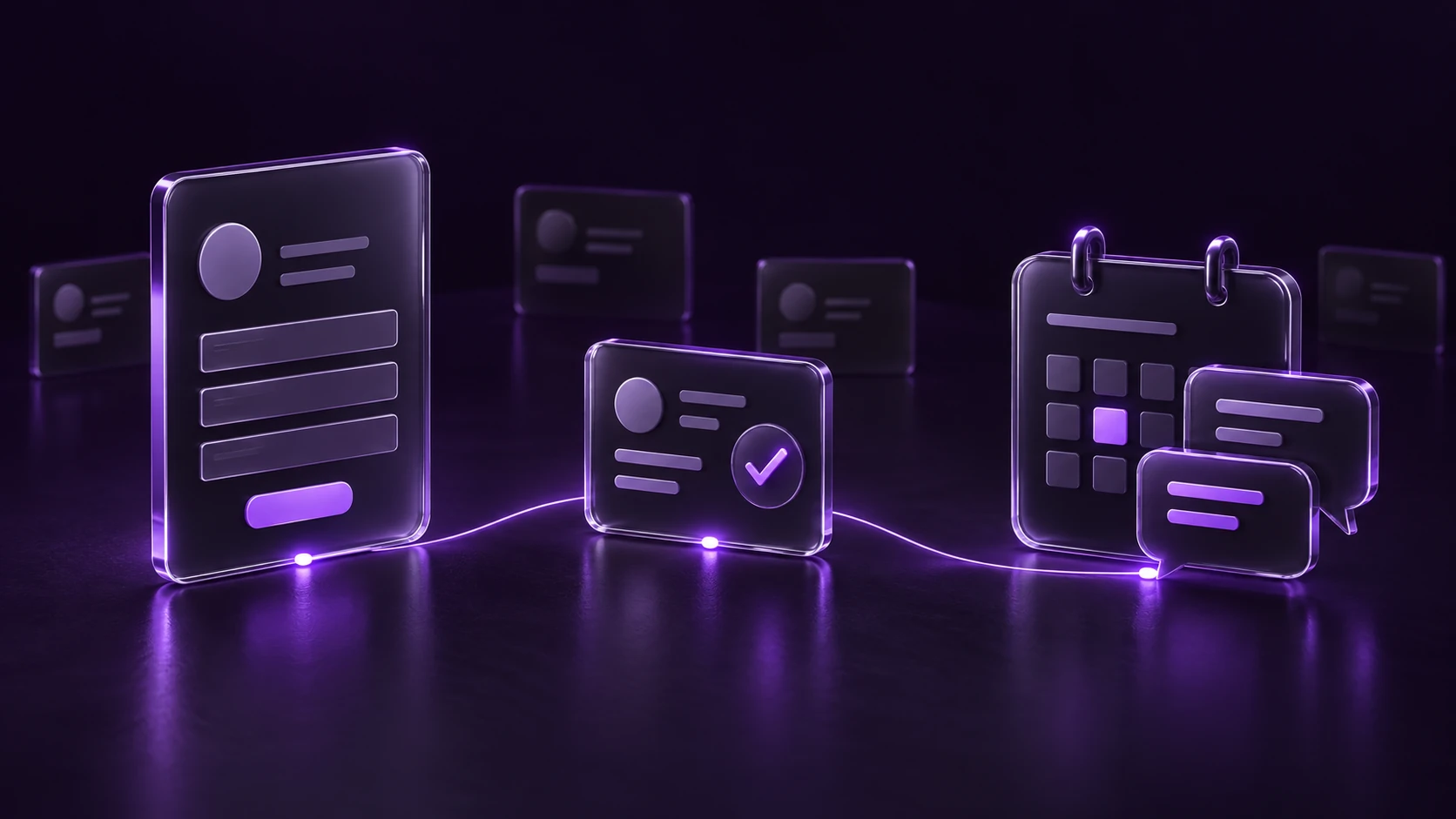
When the workflow is appropriate, AI for business can move directly from qualification to appointment booking. The caller gets a concrete next step instead of a vague promise. The team gets a scheduled conversation with the basic context already captured.
This is one of Mera’s core roles: answer, qualify and book when the conversation meets the business rules. The point is not to make the call longer. It is to make the path to the next action shorter.
4. Handle repetitive customer questions without sounding scripted
Teams often answer the same questions dozens of times: opening hours, service availability, locations, basic requirements, booking steps or what information a customer should prepare. These questions matter to the customer, even when they feel repetitive internally.
A strong AI for business setup uses an approved knowledge base and clear boundaries. It should answer what it knows, avoid inventing details and escalate when the request falls outside its scope. That is more sophisticated than a fixed phone menu and safer than giving an AI unlimited freedom to improvise.
The best experience feels simple to the caller because the complexity is handled behind the scenes: business knowledge, conversation logic and clear rules for what the AI can and cannot do.
5. Improve the handoff from AI to your human team
Good automation should make people better informed, not harder to reach. Some conversations need empathy, negotiation, specialist expertise or a decision that should remain with a human. A useful AI workflow recognizes that boundary.
Instead of sending a colleague a note that says “please call this person,” the handoff can contain the caller’s intent, relevant qualification details and the expected next step. That reduces repetition for the customer and gives the team a stronger starting point.
This is an important principle for AI for business: automate the predictable part of the journey, then make the human part more useful.
6. Turn conversations into cleaner follow-up
The value of a conversation disappears quickly when nobody records what happened. Sales follow-up becomes inconsistent when information sits in personal notes, memory or an unanswered call log.
AI for business can support the process by structuring the important information from an interaction and making the next action clearer. The exact workflow depends on the systems a company uses, but the operating principle stays the same: every meaningful conversation should have an owner, a status and a next step.
Our lead follow-up guide explains how ownership and timing affect the path from enquiry to sales opportunity. AI should strengthen that discipline rather than create another disconnected tool.

7. Measure AI for business by outcomes, not by novelty
The easiest metric to collect is usually the least useful one. A business does not need to know only how many conversations the AI handled. It needs to know what those conversations produced.
Useful measures can include answered-call coverage, qualified enquiries, booked appointments, successful handoffs, response time and the share of conversations that reach a meaningful next step. The right metrics depend on the role the AI is meant to perform.
This is why Mera belongs inside the GrowMera Growth Engine rather than being treated as a standalone gimmick. Capture is only useful if it improves conversion, and conversion is only useful if the business can measure the commercial outcome. Our marketing performance framework shows how to connect activity with qualified leads, meetings, opportunities and customers.
GROWMERA GROWTH ENGINE · CAPTURE & CONVERT
How Mera fits an AI for business strategy
Mera is GrowMera’s AI Receptionist and Voice Specialist. The service is designed around a practical conversion problem: businesses lose opportunities when calls are missed, qualification is inconsistent or the path to booking is too slow.
Mera can answer calls, handle approved FAQs, qualify leads and book appointments based on the business setup. That makes it part of Capture & Convert: the stage where attention becomes a real conversation and a conversation becomes a next step.
The strategic difference is important. GrowMera does not position AI for business as a replacement for the rest of the growth system. Mera works best when the offer is clear, the lead sources are relevant, the qualification logic is defined and the follow-up process is measurable.
A responsible AI for business checklist
Before automating a customer-facing workflow, define the purpose and the boundaries. The AI should know what information it may use, which questions it may answer, when it should stop, and what requires human review.
- Start with one clear use case. Do not automate five broken processes at once.
- Use approved business knowledge. Keep offers, policies, availability and key answers current.
- Define escalation rules. Sensitive, uncertain or complex requests should have a human path.
- Test real scenarios. Include edge cases, unclear questions and requests the AI should refuse or escalate.
- Review performance. Improve the workflow based on outcomes and conversation quality, not assumptions.
For a broader governance reference, the NIST AI Risk Management Framework provides a voluntary framework for organizations to consider trustworthiness and risk when designing, deploying or using AI systems.
A practical way to start
If you are exploring AI for business, begin with one repeated customer journey and write down what a successful outcome looks like. For example: answer every inbound call, collect three qualification fields, book a meeting when the criteria match, and route exceptions to a person.
Then test the workflow with real questions. Listen for awkward phrasing, missing information and situations where the AI should hand over. Improve the business logic before adding more features.
That approach keeps AI connected to growth. Instead of asking “where can we use AI?”, ask “where are we losing time, information or opportunities, and can AI improve that specific step?”
AI for business: frequently asked questions
What does AI for business actually mean?
It means applying artificial intelligence to a defined business workflow or decision. Useful examples include handling repetitive customer questions, qualifying inbound demand, summarizing conversations, supporting booking and helping teams route requests more consistently.
Should an AI receptionist replace a human receptionist?
Not necessarily. The stronger use case is often coverage and support: after-hours calls, busy periods, repetitive questions and structured first-line qualification. Human staff remain important for complex, sensitive or relationship-heavy conversations.
What can Mera do?
Mera is GrowMera’s AI Receptionist and Voice Specialist. It is designed to answer calls, handle approved FAQs, qualify leads and book appointments based on the business configuration.
How should a company measure AI for business?
Measure the outcome of the workflow. Depending on the use case, that can include answered-call coverage, qualification rate, booked appointments, successful handoffs, response time and the number of conversations that progress to an opportunity.
What is the best first AI use case for a small business?
Choose a high-frequency process with clear rules and a measurable next step. For many service businesses, inbound calls and appointment qualification are strong starting points because the problem, knowledge and desired action are relatively easy to define.
Turn more conversations into real next steps
AI for business works best when it solves a visible operational problem and connects to a measurable growth outcome. If missed calls, slow qualification or inconsistent booking are creating friction, Mera gives GrowMera a focused way to improve the Capture & Convert stage.