GROWMERA · MERE AI RECEPTIONIST · BUYER GUIDE
AI receptionist cost is not just the subscription price. The real question is whether the system can answer more valuable calls, qualify the right enquiries, book the next step and reduce the revenue leakage caused by missed or poorly handled conversations.
If you are comparing AI receptionist providers, the cheapest monthly plan can easily become the wrong benchmark. A low fee means little if the system cannot follow your qualification logic, connect to your booking flow, hand complex calls to a person or give your team enough context to continue the conversation.
This guide explains the seven factors that usually shape AI receptionist cost, a practical way to estimate return on investment, and how to decide whether a solution such as Mera, GrowMera’s AI Receptionist and Voice Specialist, is a commercially sensible fit for your business.

What AI receptionist cost really includes
There are two costs to compare: the cost of the system and the cost of the problem it is supposed to solve. The first appears on an invoice. The second is usually hidden inside missed calls, slow response, inconsistent qualification, no-shows and salespeople spending time on repetitive first-line questions.
A useful buying decision therefore starts with the current workflow. How many inbound calls arrive each month? How many are missed or answered late? Which calls are genuinely commercial? How often does the caller need a booking, a simple answer or a human specialist? Those answers tell you which features are valuable and which are unnecessary.
This is also why an AI for business project should be tied to a measurable operating problem instead of adopted because AI is fashionable.
1. Call volume and coverage change AI receptionist cost
Some businesses need overflow coverage during peak hours. Others need after-hours coverage, weekend availability or a first response on every inbound call. The required coverage changes how much voice usage the system consumes and how much operational value it can create.
Do not compare plans using minutes alone. Ask what percentage of your important calls should be handled by the AI, how long a typical first-line conversation lasts and how often the AI should transfer or route the caller. A provider that looks cheaper per minute can still cost more if conversations are inefficient or if the workflow creates unnecessary steps.
For service businesses, the commercial question is often simple: what is one qualified call worth, and how many of those calls are currently lost because nobody answers?
2. Qualification complexity affects the real value
An AI receptionist that only says hello is cheaper to configure than one that understands your lead criteria. But the second system can be far more valuable if it reduces wasted sales time and improves the quality of the information passed to your team.
Useful qualification may include service type, location, urgency, company size, project scope or the reason for calling. The questions should follow your actual sales process. They should not feel like an interrogation and they should not ask for information the sales team will ignore later.
Good qualification also connects with your wider lead generation strategy. Marketing creates demand; the receptionist helps determine whether that demand fits and what should happen next.
3. Booking and integrations can matter more than the base fee
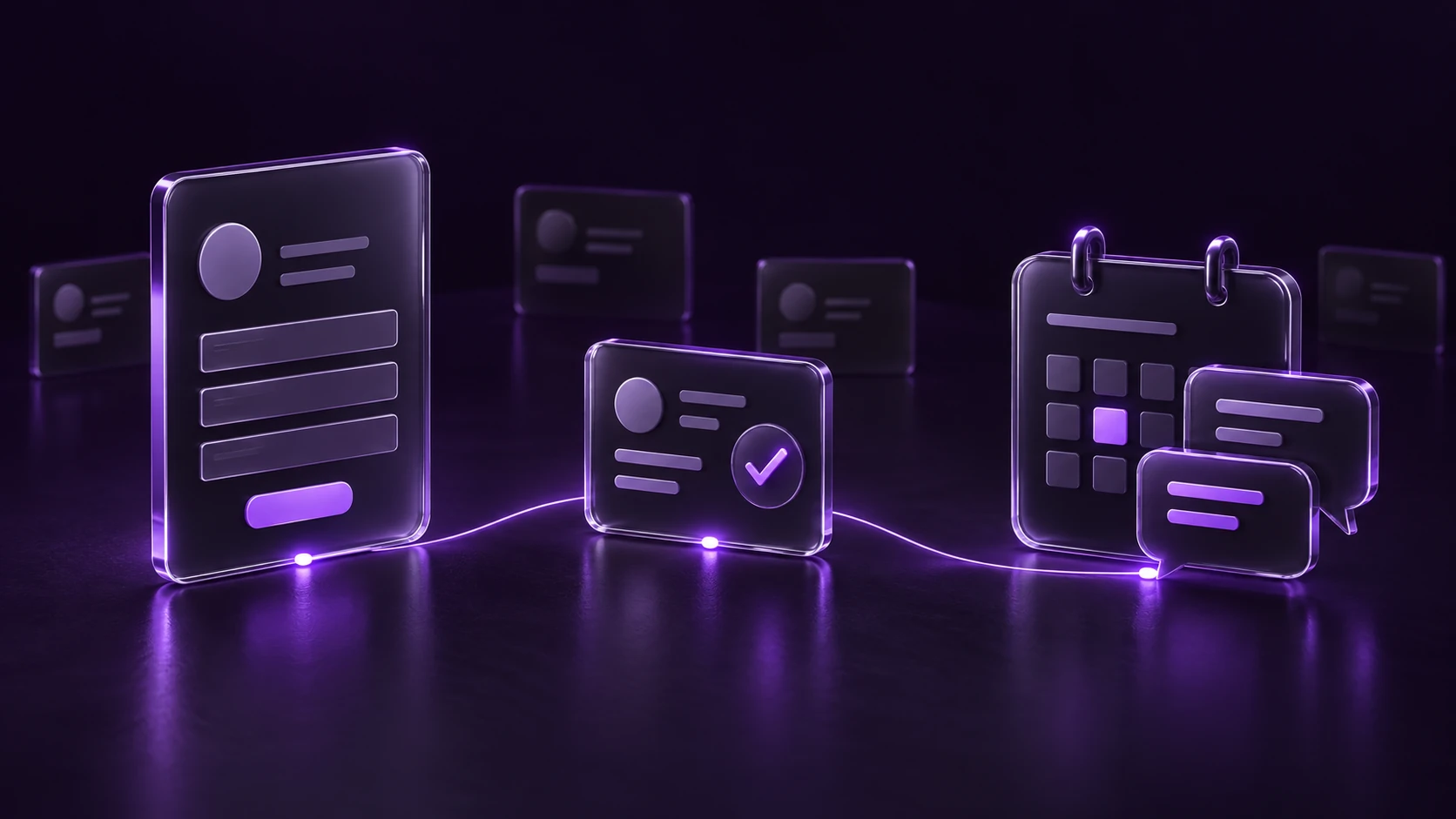
A caller who is ready to book is commercially different from a caller who is told that somebody will call back later. If your AI receptionist can move directly from a qualified conversation to the correct next step, the buying journey has fewer points where intent can disappear.
The exact integration requirement depends on your setup. You may need a calendar, CRM, lead routing, notifications or another internal system. Every integration should have a business reason. Buying integrations because they look impressive creates complexity without necessarily improving conversion.
Before you compare AI receptionist cost, write down the three actions the system must complete successfully. If those actions are reliable, additional features can come later.
4. Business knowledge needs to stay accurate
An AI receptionist needs approved information about the business: services, locations, opening hours, booking rules, common questions and the boundaries of what it may say. The more dynamic the business, the more important it is to have a simple process for keeping that knowledge current.
This is one reason the lowest setup fee is not always the lowest total cost. If the business team must constantly repair answers or if updates require complicated technical work, the operational burden grows. A good setup makes ownership clear: who approves information, who updates it and how changes are tested before going live.
5. Human handoff is part of the product, not a fallback
Some conversations should remain human. Complaints, sensitive cases, complex negotiation and requests outside the AI’s approved scope need a clear handoff path. The caller should not feel trapped inside automation.
The best handoff gives the human enough context to continue without forcing the customer to repeat the entire conversation. That can improve both customer experience and internal efficiency.
When evaluating AI receptionist cost, ask how escalation works, what context is preserved and what happens if a requested person or team is unavailable.
6. Reporting determines whether you can improve the system
A business does not need another dashboard full of vanity metrics. It needs enough information to understand what happened after the call: was the enquiry relevant, was an appointment booked, was a handoff successful, and did the conversation progress toward a sale?
Track metrics that connect to the operating goal. Good examples include answered-call coverage, qualified enquiries, booked appointments, successful transfers and the percentage of calls that reach a defined next step. Then connect them with the broader marketing performance framework.
7. Setup, testing and support shape total cost
Implementation is where many AI receptionist projects either become useful or become a demo that never earns trust. A serious rollout needs call scenarios, business rules, qualification logic, edge-case testing and a clear owner for improvements.
Ask what the initial setup includes, how changes are made, what support looks like after launch and how performance is reviewed. A slightly higher implementation cost can be justified if it reduces the risk of poor calls and creates a system the team can actually use.
COMMERCIAL CHECK · NOT A PROMISE
A simple AI receptionist ROI model
Start with the opportunity that currently leaks out of the process. A practical planning model is:
Missed or delayed commercial calls × qualification rate × close rate × average gross profit per new customer
Then compare that estimated value with the total cost of the AI receptionist, including setup, usage and ongoing management. Use your own numbers. Do not use industry averages as if they guarantee your result.
Example: if 40 potentially commercial calls are missed or delayed each month, 30% would normally qualify, 20% of qualified opportunities close, and average gross profit is €1,500, the planning value of that leakage is €3,600 per month. That does not mean an AI receptionist will recover all of it. It tells you the size of the problem and what level of improvement would be needed to justify the investment.
The same discipline applies to lead follow-up: measure the next step, not just the activity.
AI receptionist vs human receptionist vs missed calls
| Factor | AI receptionist | Human receptionist | Missed call / voicemail |
|---|---|---|---|
| After-hours coverage | Can be configured for continuous coverage | Requires staffing | No live conversation |
| Complex judgement | Should escalate outside defined scope | Strong when trained and empowered | None |
| Consistency | High when logic and knowledge are maintained | Depends on people, workload and training | Consistent but passive |
| Best use | Coverage, FAQs, qualification, booking | Sensitive and complex conversations | Low-value overflow only |
GROWMERA GROWTH ENGINE · CAPTURE & CONVERT
When Mera is a strong commercial fit
Mera is designed for businesses that lose opportunities between the inbound call and the next sales step. It can answer calls, handle approved FAQs, qualify leads and book appointments based on the business setup.
Mera is especially relevant when missed calls matter, first-line questions repeat, qualification can be clearly defined and booking is a valuable next action. It is less suitable when almost every call requires specialist judgement from the first second or when the business has not yet defined what a qualified enquiry means.
Within the GrowMera Growth Engine, Mera belongs to Capture & Convert. The objective is not to add another AI tool. It is to make more of the demand you already create turn into measurable opportunities.
Before you compare AI receptionist pricing, ask these 8 questions
- What percentage of our important calls are currently missed, delayed or poorly qualified?
- Which questions should the AI answer, and which should always go to a human?
- What information makes a lead qualified for our team?
- Should a qualified caller be able to book immediately?
- Which systems actually need to be connected?
- How will we update business knowledge after launch?
- Which commercial outcomes will we measure every month?
- Who owns improvement when real calls reveal gaps?
If a vendor cannot help you answer these questions, a low AI receptionist cost is not necessarily a good deal.
AI receptionist cost: frequently asked questions
How much does an AI receptionist cost?
Pricing varies by provider, usage, setup complexity, integrations and support. Compare total cost against the business workflow you need, not only the advertised monthly fee.
Is an AI receptionist cheaper than hiring a receptionist?
They are not identical roles. AI can provide scalable first-line coverage for repetitive and structured conversations, while humans remain stronger for nuanced judgement, relationships and sensitive situations. The right comparison depends on what work you need covered.
What creates the biggest ROI?
ROI is strongest when the AI addresses a visible commercial leak such as missed inbound calls, slow qualification or unnecessary delay before booking. Use your own conversion and gross-profit numbers to model the opportunity.
Does Mera have a fixed public price?
Mera implementation starts from $750 one-time and managed AI receptionist service starts from $499/month. Usage is billed based on call volume and configuration, while final scope depends on integrations, booking workflows, languages, qualification logic and business requirements.
Do not buy an AI receptionist until you know what one qualified call is worth
The best buying decision starts with your missed-call problem, your qualification logic and the next action you want the caller to take. Once those are clear, AI receptionist cost becomes a business case instead of a software comparison.